
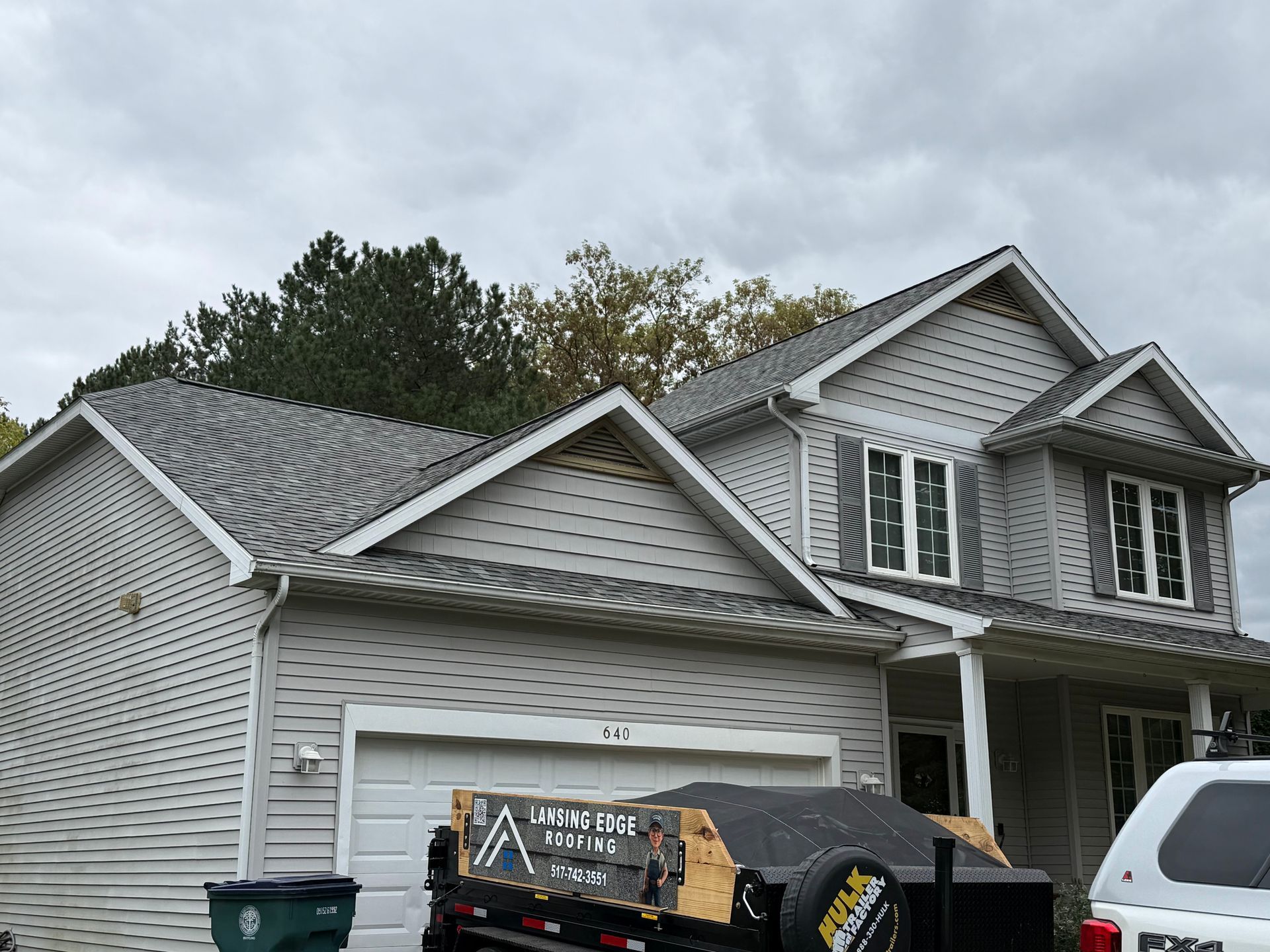
Roofs Protected After Severe Weather Hits
Storm Damage Repair & Insurance Claims in Lansing for properties showing hail dents, wind-lifted shingles, or visible roof punctures following severe weather
Michigan storms produce wind gusts that lift shingle edges and break the seal bond between layers, creating entry points for water infiltration that spreads across roof decking even when surface damage looks minimal. Lansing Edge Roofing responds quickly after hail events or high-wind systems to inspect roofing damage, deploy emergency tarping when needed, and document conditions for insurance claims filed within your policy's reporting window. Storm response matters because delays allow secondary water damage to compromise ceilings, insulation, and framing that weren't affected by the initial impact.
Storm damage inspections identify creased shingles where hail impact fractured the asphalt mat, lifted tabs that expose underlayment to UV degradation, and missing shingles torn away by straight-line winds common in Mid-Michigan spring systems. Contractors photograph damage patterns, measure impact density across roof zones, and assess whether repairs will restore system integrity or whether cumulative damage warrants full replacement covered under your policy.
Schedule an immediate storm damage assessment following any major weather event to establish claim timelines and prevent further interior deterioration.
How Storm Response Addresses Weather Damage
Emergency tarping secures compromised roof sections during claim processing so additional rain doesn't expand damage into living spaces or create mold conditions in attic insulation. You receive temporary weather protection while adjusters evaluate loss and approve repair scope, preventing the compounding damage that occurs when exposed decking absorbs moisture through multiple weather cycles.
After repairs, you'll see uniform shingle color without the mismatched patches that signal spot fixes, restored flashing that channels water away from vulnerable transitions, and elimination of the dripping or staining that appeared after the storm. Documentation provided during inspections gives adjusters the evidence needed to approve claims without dispute, including measurements of hail dent diameter, counts of damaged shingles per roof section, and photos showing wind damage patterns consistent with reported storm intensity.
Insurance claim support includes meeting adjusters on-site, providing detailed estimates that match policy coverage terms, and explaining the difference between cosmetic damage that doesn't compromise function and structural damage that requires immediate intervention. Some policies cover full replacement when damage exceeds threshold percentages, while others limit coverage to repair of directly affected areas, which determines whether you'll pay out-of-pocket for remaining roof sections that weren't storm-damaged but show age-related wear.
Common Questions About Storm Damage and Claims
Storm damage claims involve understanding what insurance covers, how quickly you need to act, and what documentation protects your interests during the adjustment process.
What storm damage qualifies for insurance claims?
Policies typically cover sudden impact damage from hail, wind, falling branches, or debris—creased shingles from hail strikes, lifted tabs from wind gusts exceeding rated shingle wind resistance, and punctures from tree limbs all meet coverage thresholds when documented properly.
How soon after a storm should I request an inspection?
Most policies require reporting within days or weeks of the event, and delays complicate claims because adjusters can't distinguish fresh storm damage from pre-existing wear—immediate inspection establishes clear timelines and documents conditions before additional weather obscures evidence.
Why do adjusters sometimes deny roof claims in Lansing?
Denials occur when damage appears consistent with aging rather than sudden storm impact, when pre-existing conditions like worn shingles make it difficult to isolate storm-specific damage, or when reporting delays allow multiple weather events to confuse causation—thorough documentation prevents these disputes.
What does emergency roof tarping involve?
Tarping uses reinforced material anchored along ridge and eave lines to cover damaged sections, preventing rain entry while you complete claims processing—proper installation avoids further shingle damage from anchor points and remains secure through subsequent storms.
How do repairs differ from full replacement after storms?
Repairs replace only damaged shingles and flashing in localized zones, suitable when impact affects isolated areas, while replacement becomes necessary when damage spreads across multiple roof planes or when cumulative loss exceeds policy thresholds that trigger full coverage.
Lansing Edge Roofing documents storm damage with the detail insurers require to process claims efficiently, reducing the back-and-forth that delays repairs and leaves your property exposed. Contact our team immediately after severe weather to secure emergency protection and begin the claim documentation process before additional storms complicate assessment.