
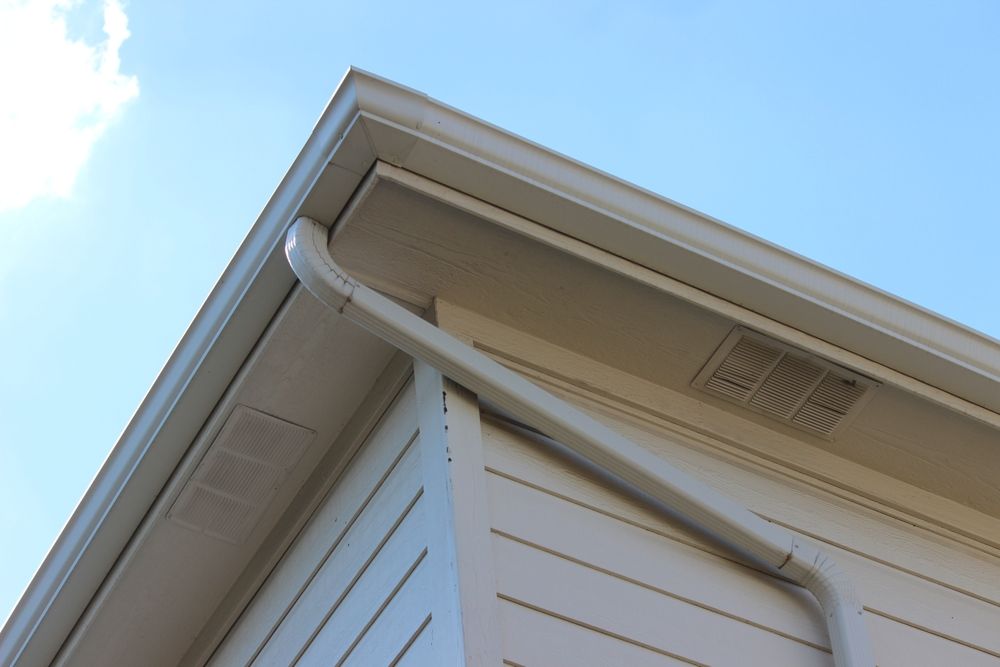
Drainage Systems That Protect Foundations
Seamless Gutters & Gutter Guards in Lansing for properties experiencing basement seepage, eroded landscaping, or clogged gutters requiring frequent cleaning
Gutters channel roof runoff away from foundation perimeters where water accumulation creates hydrostatic pressure against basement walls, saturates soil that loses load-bearing capacity, and floods window wells that leak into finished lower levels. Seamless gutter installation eliminates the joints every ten feet that characterize sectional gutters, reducing leak points where water escapes and causes fascia rot or foundation exposure. Lansing Edge Roofing fabricates gutters on-site to exact property measurements, creating continuous aluminum channels from corner to corner that handle Michigan's heavy spring runoff and autumn leaf loads without the separation failures common in pre-cut sectional systems joined with leaking seams.
Seamless aluminum gutters form continuous runs custom-cut to building dimensions, with corners and downspouts positioned to direct water toward drainage areas away from structures. Gutter guards installed over these channels reduce debris accumulation that clogs downspouts and causes overflow, particularly important in Mid-Michigan properties surrounded by mature maples and oaks that shed leaves heavily each fall.
Schedule a gutter inspection with any roofing project to evaluate drainage capacity and identify improvements needed to protect your foundation and landscaping.
Why Proper Gutter Installation Works Long-Term
Installation involves securing gutters to fascia boards with hidden hangers spaced for structural support, sloping channels toward downspouts at gradients that maintain flow velocity without creating standing water sections where debris settles. Contractors assess fascia condition during installation, replacing rotted boards that won't hold fasteners securely and ensuring gutters attach to solid wood capable of supporting weight when channels fill during heavy rain.
After installation, you'll notice water discharging through downspouts during storms rather than sheeting over gutter edges, basement walls that remain dry through spring thaw cycles, and landscaping beds that don't show erosion trenches where concentrated roof runoff previously washed away mulch and topsoil. Gutter guards reduce the twice-yearly ladder work needed to remove packed leaves and helicopter seeds, maintaining flow capacity with minimal cleaning intervention while preventing the ice dam formation that occurs when clogged gutters trap meltwater against roof edges.
Soffit and fascia repairs completed during gutter projects address wood damage before new gutters install, preventing the premature failure that occurs when gutters attach to compromised boards that rot through within years. These edge components work together as a system protecting roof framing from moisture exposure, making coordinated replacement more cost-effective than addressing failures individually as they develop over time.
Questions About Gutter Systems and Maintenance
Homeowners frequently ask about gutter materials, guard effectiveness, and how drainage systems integrate with overall property water management.
What makes seamless gutters better than sectional?
Seamless gutters eliminate joints every ten feet where sectional systems connect with hardware that loosens over time and sealant that degrades, reducing leak points from dozens per home down to only corners and downspout connections that require sealed transitions.
How do gutter guards reduce maintenance in Lansing?
Guards use perforated covers or mesh screens that allow water entry while blocking leaves and seed pods, maintaining flow capacity through autumn months when unprotected gutters clog completely and require ladder access to clear debris manually.
Why does gutter slope matter for drainage?
Proper slope—typically one-quarter inch drop per ten feet of run—maintains water velocity that carries small debris toward downspouts rather than allowing sediment to settle in level sections where standing water breeds mosquitoes and accelerates corrosion.
When should soffit and fascia be replaced with gutters?
Replacement makes sense when wood shows rot from previous gutter overflow, paint failure that signals moisture penetration, or physical damage that compromises the structural attachment surface—addressing these issues during gutter installation avoids premature system failure.
What gutter capacity do Michigan properties need?
Capacity depends on roof area and pitch, with five-inch gutters handling most residential applications and six-inch channels recommended for steep roofs or large drain areas where concentrated runoff exceeds standard gutter volume during intense summer storms common in Mid-Michigan.
Lansing Edge Roofing evaluates drainage patterns around your property to position gutters and downspouts where they direct water most effectively away from vulnerable foundation zones and landscaping. Request a drainage assessment to identify gutter improvements that prevent the basement moisture and soil erosion issues caused by inadequate roof runoff management.